
How to Grow Your Small Business with Digital Marketing- A Simple Guide to Social Media SEO and Online Ads
Grow Online Digital Agency
Digital marketing is a game changer for your business as it levels the playing field, allowing you to compete with larger companies.
With the right strategies, your business can reach a wider audience.
This guide will show you how to use digital marketing effectively.
These are some of the most commonly used tools that we are going to talk about.
- Social media platforms like Instagram, Facebook, TikTok, and others are powerful tools for showcasing your company and your work to customers, and also for talking to them. They help build brand awareness.
- SEO, or Search Engine Optimization, is crucial for improving your website’s visibility on Google, Bing, and other search engines. It drives people to your website without the need to pay for Ads (this is called organic traffic), and boosts your online presence.
- Online ads, like Google Ads, Instagram Boost and Facebook Ads, give you a way to reach more people as you are paying these platforms to show your content at the top of their pages (Sponsored). They allow you to reach specific demographics with precision. These are paid traffic.
- Content marketing makes your company an industry leader. It involves creating content that really works for your audience (paying for illustrators, writers, copywriters).
- Email marketing remains a vital tool. It helps to keep a strong customer relationships over time.
Table of Contents
Why Digital Marketing Matters for Small Businesses?
The primary reason digital marketing matters for small businesses is because it enables them to grow faster while spending less money.
Take, for example, a company that spends a lot of money on paper flyers, or printed magazines, and compare it with another one that sends emails instead or posts on Facebook Groups?
Unlike traditional marketing (non-digital marketing) like for example mail, outdoors, flyers, digital channels can be highly targeted and cost-effective.
This means small businesses can maximize their marketing budgets.
Social Media Marketing is one of the most
accessible forms of Digital Marketing
A strong digital presence allows businesses to compete on a larger scale. It makes reaching customers, near and far, more feasible.
Platforms like Facebook and Instagram facilitate direct interaction with your audience, and “they work for you for free”.
SEO, on the other hand, enhances your business’s visibility on search engines like Google. We will discuss SEO a little later.
Improved visibility leads to more organic traffic (the non-paid one – that one where people come to your site for free – they just found you on Google) and potential customers.
Consider these key benefits of digital marketing:
- Expands market reach
- Provides measurable results
- Increases engagement
Through online ads, small businesses can reach specific demographics quickly.
Do you know how many people read a magazine that is not a digital marketing, for example? No – you don’t. Do you know how many people watched your Instagram Post? Yes, you do.
Digital marketing enables a more personalized approach to customer interactions.
Ultimately, leveraging digital marketing is about creating significant growth opportunities.
With consistent effort, small businesses can grow, get more clients, and make more money.
We at Grow Online can help you with all these tools. Talk to us to know more.
Understanding Your Target Audience
Knowing your target audience (the group of people you want to reach) is crucial for effective digital marketing. It ensures your messages resonate with the right people.
Start by analyzing who your current customers are, from where they are (country, state, neighborhood), their age, location, and interests.
Understanding their needs and preferences allows you to customize your marketing strategies effectively.
Personalization increases engagement and conversion rates.
Consider these steps to define your audience:
- Conduct surveys and collect feedback
- Analyze competitor audiences
- Use tools like Google Analytics
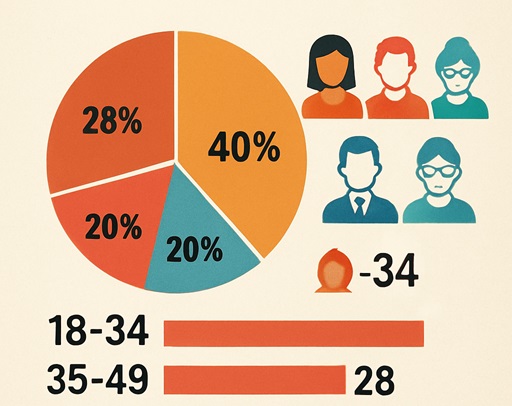
Once you have a clear picture of your audience, align your marketing strategies accordingly.
Ensuring relevance increases the likelihood of success.
Empathize with your audience’s problems and position your business as the solution.
This approach builds trust and establishes lasting relationships.
Building a Strong Online Presence
A strong online presence is crucial for small businesses. It increases visibility and attracts more customers.
Begin with a professional website or a simple web page presenting your company and a contact form.
Ensure it’s user-friendly and mobile-optimized to capture every visitor’s attention.
Focus on these key elements:
- Clear and consistent branding
- Easy navigation
- Fast loading speed
- Quality content
Regularly update your website with fresh and relevant content. This practice not only keeps visitors engaged but also benefits SEO.
Utilize social media to extend your online reach.
Each platform can amplify your brand’s message to diverse audiences.
Interact with your audience consistently. Engaging with comments and messages builds a loyal community around your brand.
Incorporate customer reviews and testimonials into your website. Positive feedback helps build credibility and trust in your business.
Finally, track and measure your online efforts with Google Analytics or some other tool.
Use analytics to refine and optimize your strategies continuously for better results.
We can help you with your Instagram, Facebook, or even Google Analytics. Know more here.
Social Media Marketing: Connecting with Your Customers
Social Media marketing offers small businesses an opportunity to engage with their customers on a personal level.
It’s all about building relationships beyond transactions.
Each platform has unique features that cater to different audiences.
Remember when we spoke about your target audience? This is where you will use that information. Different audiences use different social media apps.
It’s important to understand your audience’s preferences and online behavior.
Engage with your audience by responding to comments, questions, and messages promptly.
Social Media Channels like Instagram and Facebook work for you kind of for free. You post and they work to show your content for you
Use visual content like images and videos to capture attention. These formats often perform better than text alone.
Host live sessions and events on social media. They provide a platform for real-time interaction with your audience.
Consider partnering with influencers who share your brand’s values. Their endorsement can expand your reach and credibility.
Use analytics tools to track performance and adjust as necessary.
Choosing the Right Social Media Platforms
Selecting the right social media app & platforms is crucial.
Not every platform may be ideal for your business or audience.
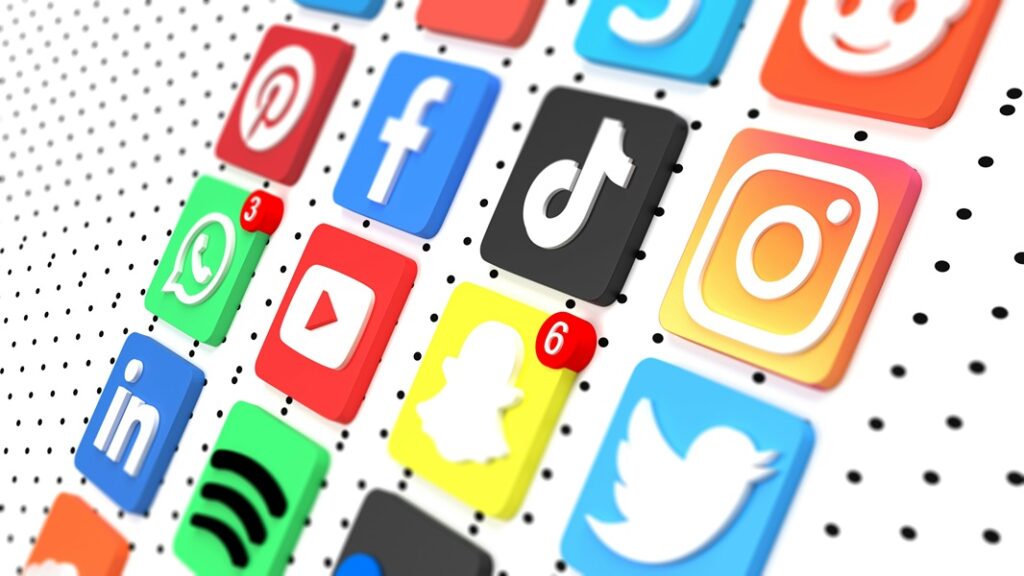
Consider these steps when choosing the one you should work with:
- Analyze your target audience.
- Evaluate each platform’s user base and functionality.
- Align platform characteristics with business goals.
Facebook and Instagram offer vast reach and diverse features. These platforms are ideal for image-rich content and community building.
LinkedIn is best for B2B interactions and networking. It’s essential for businesses targeting professionals and organizations.
Regularly assess your chosen platforms’ effectiveness.
Don’t hesitate to switch strategies if another platform offers better engagement.
Creating Engaging Content for Social Media
Creating engaging content is key to social media success. Your content must inform, entertain, and resonate with your audience.
Here are some practical tips:
- Identify trending topics relevant to your industry.
- Use a consistent and authentic voice.
- Incorporate a mix of media, such as images and videos.
Keep content fresh and timely to maintain audience interest.
Seasonal themes or current events can inspire creative ideas.
Pose questions and encourage discussions.
Engaging posts start conversations and connections with your audience.
Share user-generated content. This approach builds community and provides authentic endorsements for your brand.
Track content performance metrics like engagement and shares.
Growing and Engaging Your Community
Building a social media community (a group of followers) requires consistent effort. It’s all about working on interaction.
Focus on these strategies:
- Post consistently to keep your audience engaged.
- Create interactive posts like polls and quizzes.
- Acknowledge and thank your followers regularly.
Show appreciation by highlighting followers in your posts – it enhances loyalty and encourages future engagement.
Host social media contests and giveaways. They can drive significant attention and engagement to your profiles.
Collaborate with other brands or influencers for cross-promotions. This can introduce your brand to new audiences.
Finally, make your community feel heard.
Collect feedback through surveys and act on it, showing you value their opinions.
SEO for Small Businesses: Getting Found Online
SEO, or Search Engine Optimization, is crucial for small businesses to improve online visibility.
It helps attract organic traffic to your website.
Wait – What is SEO ? I hear SEO here and there.
I know, sometimes people believe everyone knows everything.
What is SEO (non-technical explanation)?
SEO stands for Search Engine Optimization.
Google, for example, is a Search Engine.
SEO is basically the process of making your website show up higher on Google (or other search engines) when people search for something related to what you offer.
Think of it like this:
Imagine your website is a store in a huge mall (the internet). SEO is how you make sure your store is easy to find. You put up signs, make your window display attractive, and make sure your store name matches what people are looking for. That way, when someone walks into the mall looking for something you sell, they find you quickly—maybe even before they find your competitors.
Some things that help with SEO:
- Using the right words on your site (the ones people are typing into Google)
- Making sure your site loads fast and works well on phones
- Getting other websites to link to yours (like good word-of-mouth)
The better your SEO, the more likely people are to find you online without you having to pay for ads
Think of SEO as a journey. It’s a long-term strategy rather than a short-term tactic.
Successful SEO involves multiple components working together.
Keyword research is the foundation of SEO. Use tools to discover the terms your audience uses to find services like yours.
Optimize your website content with these keywords. Ensure each page has unique and relevant keywords without overstuffing
Don’t forget about meta tags.
Titles and descriptions should be concise yet descriptive, featuring your primary keywords.
Building backlinks from reputable sites increases authority and improves search rankings.
Aim for natural, quality links over quantity.
Keep user experience in mind.
A fast, mobile-friendly website enhances usability, impacting search engine rankings positively.
Regularly update and monitor your SEO strategy.
You can use free tools to help you on this SEO analysis (AHRefs or SpyFu), or contact us as this is one of our specialties.
Local SEO: Reaching Customers Near You
We spoke about SEO a little before: SEO is a technique to help people find your web page in Google and other Search engines.
But and about in Google Maps, or Waze, or Apple Maps? How can you optimize your Google Profile to appear before your competitors?
This is what we call Local SEO.
Local SEO is vital for businesses relying on nearby customers. It ensures you appear in local search results.

How can you optimize your Google Profile to appear before your competitors?
- Claim and optimize your Google My Business profile
- Include location keywords naturally in your website content.
- Take a lot of care of Customer reviews.
Here are key steps to implement:
- Claim and optimize your Google My Business profile.
- Include location keywords naturally in your website content.
- Gather and manage customer reviews actively.
Encourage satisfied customers to leave positive reviews. High ratings enhance your local credibility and visibility.
Building citations — mentions of your business on directories is vital.
Ensure your name, address, and phone details are consistent.
Participate in local community events or sponsorships.
This engagement can boost your visibility both online and offline.
On-Page and Off-Page SEO Basics
On-page and off-page SEO are critical elements of a complete SEO strategy. They target different aspects of website optimization.
Key on-page elements include:
- Optimizing headings and content with target keywords.
- Using alt text for images.
- Ensuring fast page load speeds.
Off-page SEO focuses on building your site’s credibility externally. Techniques include:
- Earning backlinks from high-authority sites.
- Engaging on social media to drive external traffic.
- Guest blogging to reach new audiences.
Utilize schema markup to enhance on-page SEO.
These codes help search engines understand your content better.
Off-page efforts should emphasize quality over quantity.
A single link from a reputable source often outweighs many low-quality ones.
Regularly audit both on-page and off-page elements.
An ongoing assessment can help identify areas needing improvement or updates.
Like we said before, there are free tools you can use on your SEO analysis (AHRefs or SpyFu), or you can contact us, as this is one of our specialties.
Online Advertising: Reaching the Right People Fast
Online advertising (referred to Ads in Google and Facebook, Boost in Instagram) offers small businesses a powerful tool to target specific audiences quickly.
Note the words “quickly” and “specific”.
When you pay for Ads, you are basically paying a little value to have
a VIP place on the internet (Google, Bing, etc) or social media (Facebook, WhatsApp, TikTok, Instagram).
It creates opportunities to engage with potential customers more effectively.
Using platforms like Google Ads or Facebook Ads, you can reach people interested in your products or services.
The beauty of online advertising lies in its targeting capabilities.
You can segment audiences based on demographics, location, interests, and behaviors.
This precision minimizes wasted ad spend, as your message only reaches those more likely to be interested in what you want to sell.
Choosing the right advertising platform is essential, and again, this is why it is important to define your target audience.
Each comes with unique strengths that serve different marketing goals.
Different types of online ads include:
- Pay-Per-Click (PPC) Ads
- Display Ads
- Video Ads
Tracking the results of online ad campaigns is vital.
Use tools like Google Analytics, Google Ads, Meta Business Suite to measure performance and adjust strategies.
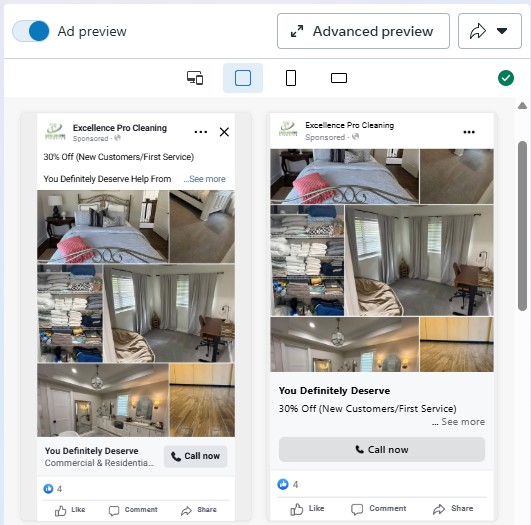
A VIP place on the internet (Google, Bing, etc) or social media (Facebook, WhatsApp, TikTok, Instagram)
- Pay-Per-Click (PPC) Ads
- Display Ads
- Video Ads.
Retargeting ads allow you to re-engage users who showed interest but didn’t convert.
These ads remind them of your offerings, increasing chances of conversion.
Budgeting is crucial in online advertising.
Set clear limits to avoid overspending while maximizing the return on investment (ROI).
Adjust your budgets based on the campaign performance.
Online advertising requires creativity. Compelling ad content, including eye-atching visuals and persuasive text, attracts potential customers.
Continuously experiment and test different ad elements.
A/B testing can help identify what resonates best with your audience.
Google Ads and PPC for Small Businesses
Google Ads are those “sponsored” boxes you can find when you search for something on Google.
It operates on a pay-per-click model, meaning you pay only when someone clicks.
Setting up a Google Ads campaign involves targeting the right keywords.
They are created and managed inside the Google Ads Platform
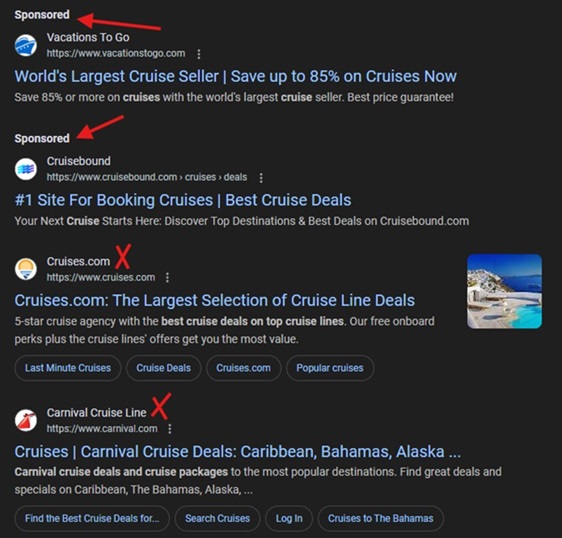
Start by researching terms your potential customers are searching for.
Effective keyword targeting ensures your ads appear for relevant searches.
Choose match types that align with your objectives.
Here’s a simple keyword strategy:
- Broad match for wide reach.
- Phrase match for specific searches.
- Exact match for precise targeting.
Choosing the right ad format is crucial. Options include search ads, display ads, and shopping ads, among others.
Monitoring your campaign performance is essential.
Keep an eye on metrics like click-through rates and conversion rates to measure success.
We at Grow Online run Google Ads as one of our advertising plans, and we can help you with that too.
Social Media Ads: Facebook, Instagram, and More
Social media Ads are also another powerful tool for small businesses.
Platforms like Facebook and Instagram allow for targeted ad campaigns directed to specific audience segments.
Each platform offers unique targeting options.
Utilize demographic, interest, and behavioral targeting to reach the right people.
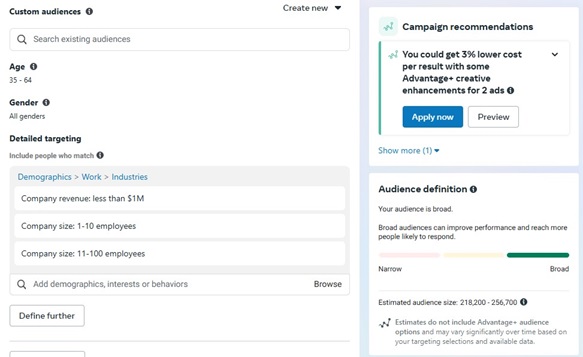
The strength of Social Media Ads lies in their visual appeal.
Use engaging images and videos to capture and hold attention.
Key elements of a successful social media ad campaign:
- Strong visuals that capture attention.
- Clear call-to-action to guide user behavior.
- Consistent branding to build recognition.
Experiment with various ad formats, such as carousel ads or story ads, to see what works best for your audience.
Understanding social media analytics is vital for refining ad campaigns.
Pay attention to metrics like engagement rates and audience insights.
A/B testing different ad components, from visuals to copy, provides valuable insights.
This approach helps optimize performance and achieve better results.
Content Marketing: Building Authority and Trust
Content marketing is essential for small businesses looking to establish authority and gain trust.
By sharing valuable insights, you position your brand as a leader in your industry.
This builds credibility and attracts a loyal audience.
Creating high-quality content should be a priority.
Focus on addressing your audience’s pain points and answering their questions.
This helps in forming lasting connections with potential customers.
Content can take many forms. Blogs, infographics, and videos are popular choices that engage users. Choosing the right content type is vital for resonating with your audience.
Effective content marketing strategies include:
- Maintaining a consistent posting schedule.
- Using clear and engaging visuals.
- Encouraging audience interaction through comments or shares.
Promote your content across various channels to maximize reach. Utilize social media and email newsletters to drive traffic to your content.
Continually assess the performance of your content. Analyze metrics such as page views and engagement to refine your strategy. Being adaptable ensures your content remains relevant and impactful.
Email Marketing
Email marketing (we are not talking about SPAM) is still a fantastic tool to retain customers.
It’s a direct way to communicate, and one of the best ways for your business to maintain a strong connection with your audience.
To optimize your email marketing strategy, consider the following:
- Segment your audience for tailored messaging.
- Use catchy subject lines to increase open rates.
- Include clear calls to action to boost conversions.
Regularly test and refine your emails for the best results.
Monitor metrics like open and click-through rates to understand what’s resonating.
Analyzing these insights helps you improve future campaigns and strengthen your customer relationships.
Influencer and Collaboration Strategies
Collaborating with influencers can expand your small business’s reach, as they will share your content with their followers who may not follow you directly.
Influencers have established trust with their audiences.
Partnering with them allows you to tap into a new pool of potential customers.
Choose influencers who align with your brand values. Look for those whose followers match your target market.
This ensures your efforts connect with the right audience.
Consider these steps for successful collaborations:
- Identify relevant influencers in your area.
- Establish clear goals and expectations.
- Offer mutually beneficial terms to maintain long-term relationships.
Engaging in thoughtful collaborations brings credibility and can lead to more business opportunities.
Measuring Success: Analytics and Optimization
Understanding the impact of your digital marketing strategy is essential.
Analytics help you track key performance indicators. This analysis tells you what strategies work best, which ones are not working, and you should not spend more time and money with them.
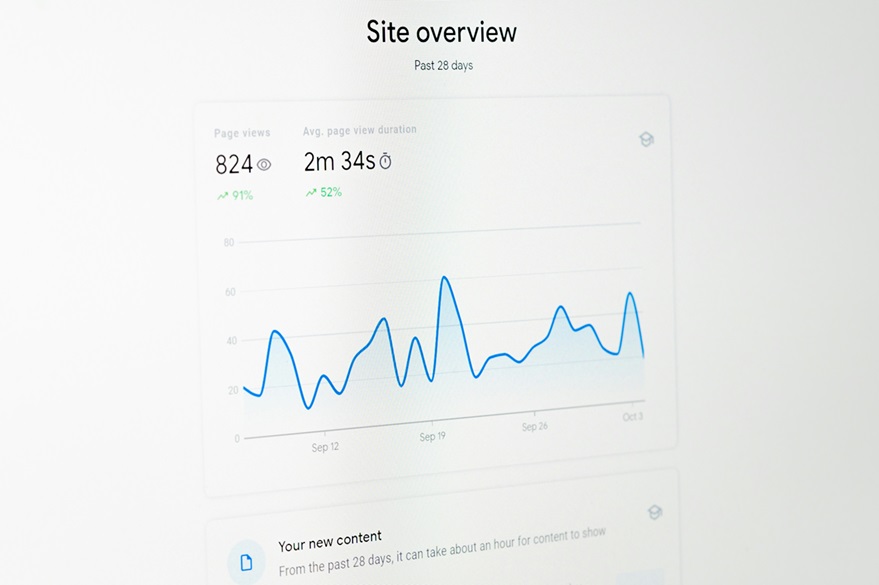
Some common metrics to keep your eyes on:
- Website traffic and bounce rates.
- Conversion rates for campaigns.
- Engagement rates on social media.
Use tools like Google Analytics – they are free.
These tools show trends and areas needing improvement.
Try to regularly review metrics.
Common Mistakes to Avoid in Digital Marketing
Mistakes can cost time and resources.
One major error is neglecting target audience research.
Another mistake is inconsistent branding across platforms. Ensure your messaging is uniform and clear.
Key mistakes to avoid:
- Ignoring analytics and feedback.
- Not keeping up with industry trends.
- Spreading resources too thinly.
Staying Up to Date: Trends and Continuous Improvement
Trends can shift rapidly, and keeping up helps maintain a competitive edge.
To ensure continuous improvement, focus on:
- Following industry news and updates.
- Regularly updating digital strategies.
- Investing time in learning new tools and techniques.
Commit to lifelong learning to enhance your digital marketing tactics.
Consistency in adaptation fuels sustainable growth.
References
USF – University of South Florida – Digital Marketing Program here.
Harvard EDU Traditional and Digital Marketing at Harvard here
Conclusion
Use social media, SEO, and online ads to expand your reach.
Regularly assess your progress and be open to adjustments.
Start small, but be consistent.
With time, you’ll see the benefits of these efforts driving growth
Keep in mind that it is always best to get support from a professional.
Talk to us now, let us know your plans.
Let’s work together on your Digital Marketing Strategy.
We are Waiting For you here.